

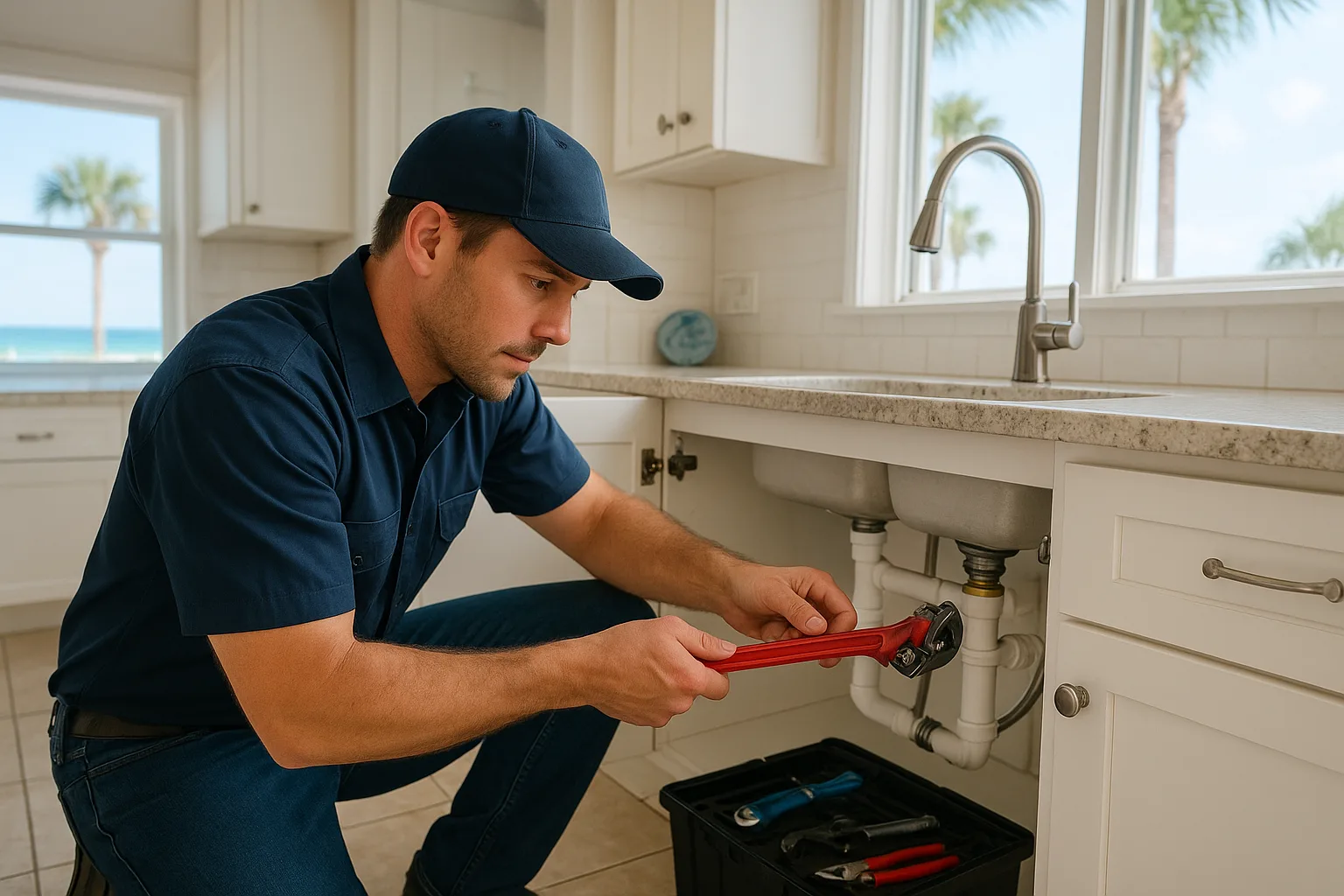
If you’ve ever stared at a flooded sink wondering where it all went wrong, you’re in good company. The kitchen is the hardest-working room in your home when it comes to water, and kitchen plumbing takes a daily beating from grease, food scraps, hard water, and constant use.
The good news? Many plumbing repairs are simple enough to handle yourself with a few basic tools and some confidence. Even better, knowing when to stop and call a pro can save you from turning a small problem into an expensive one. Let’s walk through the most common issues, the fixes that work, and the warning signs you shouldn’t ignore.
1. The Clogged Drain
A clogged drain is the number one kitchen plumbing complaint. Grease, coffee grounds, rice, pasta, and food particles build up inside the pipe until water has nowhere to go.
Try these DIY fixes first:
- Boiling water. Pour a kettle of hot water down the drain in two or three stages. This melts light grease buildup.
- Baking soda and vinegar. Pour half a cup of baking soda, then half a cup of white vinegar. Cover and wait 15 minutes, then flush with hot water.
- A cup plunger. Seal the second sink basin or the overflow opening with a wet cloth, then plunge with firm, steady strokes.
- Clean the P-trap. Place a bucket under the curved pipe below the sink, unscrew the slip nuts by hand, and clear out the gunk.
Call a plumber if: the clog keeps returning, multiple fixtures are backing up, or you hear gurgling from other drains. These are signs of a deeper blockage in the main line.
Pro tip: Skip chemical drain cleaners. They can damage pipes and are hazardous to handle. A plunger or drain snake is safer and usually more effective.
2. The Leaky Faucet
That steady drip, drip, drip isn’t just annoying. A leaky faucet can waste thousands of gallons of water a year and quietly raise your water bill.
Common causes: worn washers, damaged O-rings, corroded valve seats, or loose parts.
A simple DIY fix:
- Shut off the water using the valves under the sink.
- Plug the drain so small parts don’t disappear.
- Remove the handle (look for a decorative cap hiding a screw).
- Inspect the cartridge, washer, or O-ring. Replace anything cracked, flattened, or worn.
- Reassemble, turn the water back on, and test.
Take the old part to a hardware store so you can match the size exactly.
Call a plumber if: the leak is coming from beneath the sink or the base of the faucet, the faucet body is corroded, or the drip persists after replacing parts. A faucet that’s more than 10 to 15 years old may simply be due for replacement.
3. Slow Drains
A slow drain is a clogged drain in the making. Water still goes down, but it takes its sweet time. Think of it as an early warning system.
What to do:
- Remove the strainer and clear visible debris.
- Use a drain snake or zip-it tool to pull out hair, grease, and food buildup.
- Flush with hot water and a squirt of dish soap to cut through residue.
- Repeat the baking soda and vinegar treatment once a month.
Call a plumber if: the drain stays slow after cleaning, or you notice a persistent sewer smell. That can point to a venting issue or a partial blockage further down the line.
4. Garbage Disposal Trouble
Your garbage disposal works hard, but it isn’t indestructible. The most common problems are jams, humming without spinning, leaks, and bad smells.
If it hums but won’t spin (a jam):
- Turn off the power at the switch and unplug it or flip the breaker.
- Insert a hex key into the bottom center of the unit and work it back and forth to free the blades.
- Press the red reset button on the bottom of the disposal.
- Restore power and test with cold water running.
If it smells bad: grind a handful of ice cubes with citrus peels, or sprinkle baking soda followed by vinegar.
Never put these down your disposal:
- Grease, oil, and fat
- Coffee grounds
- Eggshells and fibrous veggies (celery, corn husks)
- Pasta, rice, and potato peels
- Bones and hard pits
Call a plumber if: the disposal leaks from the bottom (usually a failed seal), trips the breaker repeatedly, or the motor is dead. Never reach into a disposal with your hand.
5. Low Water Pressure
If your faucet has gone from a strong stream to a sad trickle, don’t panic. The cause is often simple.
Check these first:
- Clogged aerator. Unscrew the tip of the faucet, soak it in white vinegar for 30 minutes, and scrub off mineral deposits.
- Partially closed shut-off valves. Make sure the valves under the sink are fully open.
- Other fixtures. If only the kitchen is affected, the problem is local. If the whole house has low pressure, look further.
- Kinked supply lines. Check the flexible hoses under the sink for bends or damage.
Call a plumber if: pressure is low throughout the house, or you suspect a hidden leak or corroded pipes. Unexplained spikes in your water bill are a red flag.
When to Stop DIY and Call a Licensed Plumber
DIY is great, until it isn’t. Know when to hand the wrench to a professional. Call a licensed plumber right away if you notice:
- Water stains, warped cabinets, or soft spots under the sink
- Recurring clogs that return within days
- A musty smell or visible mold near pipes
- Rusty, discolored, or foul-smelling water
- Banging or rattling pipes
- Any leak you can’t locate or stop
- Multiple drains backing up at once
Hidden leaks can rot cabinets, ruin flooring, and invite mold. A fast response is almost always cheaper than waiting.
Preventive Maintenance Tips for Kitchen Plumbing
A little routine care goes a long way. Add these habits to your calendar:
- Scrape plates into the trash or compost before rinsing.
- Never pour grease down the drain. Let it cool, then toss it in the trash.
- Use drain strainers to catch food scraps.
- Run cold water while using your disposal, and for 15 seconds afterward.
- Flush drains monthly with hot water and baking soda and vinegar.
- Check under the sink every few months for moisture, drips, or corrosion.
- Clean faucet aerators twice a year to prevent mineral buildup.
- Schedule an annual plumbing inspection to catch small issues early.
Your Quick Tool Checklist
You don’t need a full workshop. Keep these basics in a toolbox or under-sink bin:
- Cup plunger
- Adjustable wrench
- Channel-lock pliers
- Screwdriver set (flathead and Phillips)
- Hex key (Allen wrench) for the disposal
- Drain snake or zip-it tool
- Bucket and old towels
- Plumber’s tape (Teflon tape)
- Flashlight
- Rubber gloves
With these on hand, most minor plumbing repairs are well within reach.
Don’t Wait for the Next Dinner-Party Disaster
Your kitchen is the heart of your home, and healthy kitchen plumbing keeps it running smoothly. Most small problems, like a leaky faucet or a stubborn clogged drain, are easy to handle when you catch them early. But when the problem is bigger than a plunger can solve, there’s no shame in calling for backup.
Ready for peace of mind? Don’t wait for a leak to become a flood. Book a plumbing inspection today or contact a licensed plumber to check your pipes, faucets, drains, and disposal before small issues turn into costly repairs.
Your future self (and your next dinner guests) will thank you.